

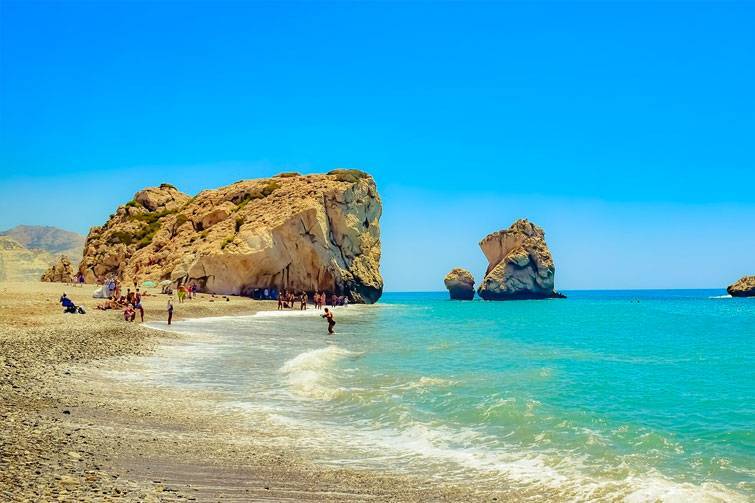
About This Location
The beach itself is a mix of pebbles and shingle, stretching out against the crystal-clear sea. While swimming is possible, caution is advised because of strong currents and steep drops close to shore. Many visitors come simply to walk along the beach, admire the striking rock formations, and watch the play of light at sunrise and sunset, which adds even more magic to the site. The combination of natural beauty and mythology makes Petra tou Romiou a must-see stop on any trip to Cyprus.
✨ Why It's Special
- Legendary birthplace of Aphrodite, the goddess of love and beauty
- One of the most iconic and photographed natural landmarks in Cyprus
- Stunning rock formations and sea stacks rising from turquoise waters
- A blend of myth, culture, and breathtaking scenery in one location
- Particularly beautiful during sunrise and sunset
Getting here by bus
- Petra tou Romiouabout 200 m awayOSYPA (Paphos)
630631
- Petra tou Romiouabout 200 m awayEMEL (Limassol)
70K
Scheduled times in Cyprus local time, from the Cyprus National Access Point (CC BY 4.0). Timetables and routes can change — check with the operator before travelling.
🗺️ Other Sights Nearby
Edro III Shipwreck
The Edro III is a cargo ship that has sat aground on the rocks below the cliffs near Peyia since December 2011. She was sailing from Limassol to Rhodes when a storm drove her onto the shore, and her crew were lifted off by helicopter during the night. She was never refloated, and she has been left where she stopped ever since, close enoug
Paphos Marina
The Limanaki of Paphos, or Paphos Marina is located at the edge of Kato Paphos, it combines the charm of a working fishing port with the atmosphere of a lively promenade. Fishing boats and small yachts bob gently in the water, while waterfront cafés, tavernas, and shops line the edge of the marina. It’s a place where locals and visitors a
Paphos Castle
Paphos Castle stands proudly at the western end of Paphos Harbour, a sturdy sentinel overlooking the sea and town. Its origins go back to Byzantine times when it was built to protect the harbour. Over centuries the castle was rebuilt and modified: by the Lusignans, dismantled by the Venetians, and then restored by the Ottomans in 1592. Th